Up to this point, I had used two distinct methods:
- Manual ASCII input:
- Automated image-to-ASCII processing
Last week’s feedback suggested that 1. Manual ASCII does not count as “coding,” which led me to examine the definition of coding more closely.
Coding can be understood as instructing a computer what to do through a formalised language that it can interpret. From this perspective, coding is not defined by efficiency or automation, but by the act of instruction itself.
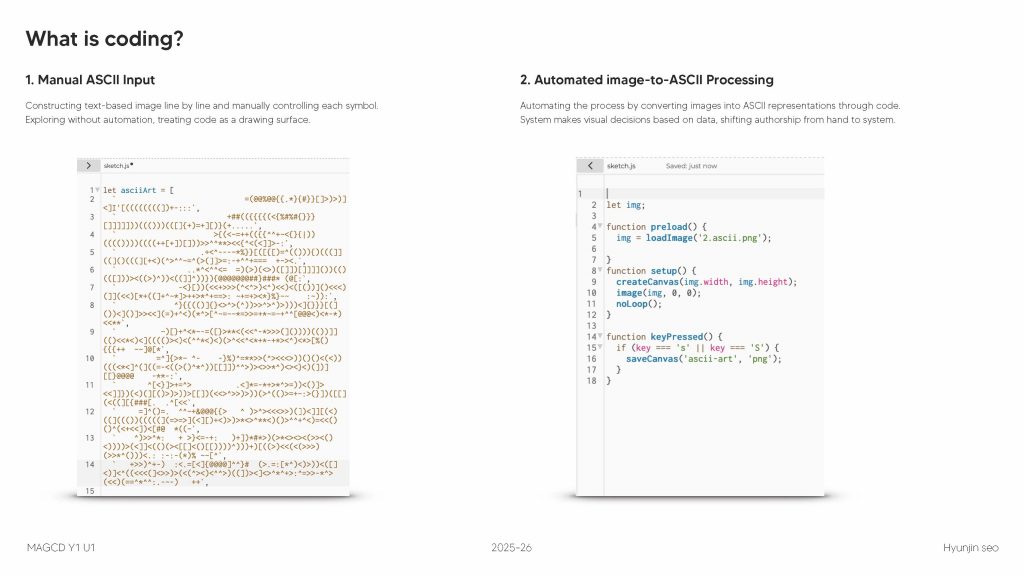
I realised that within what we call “coding,” there exists a wide spectrum:
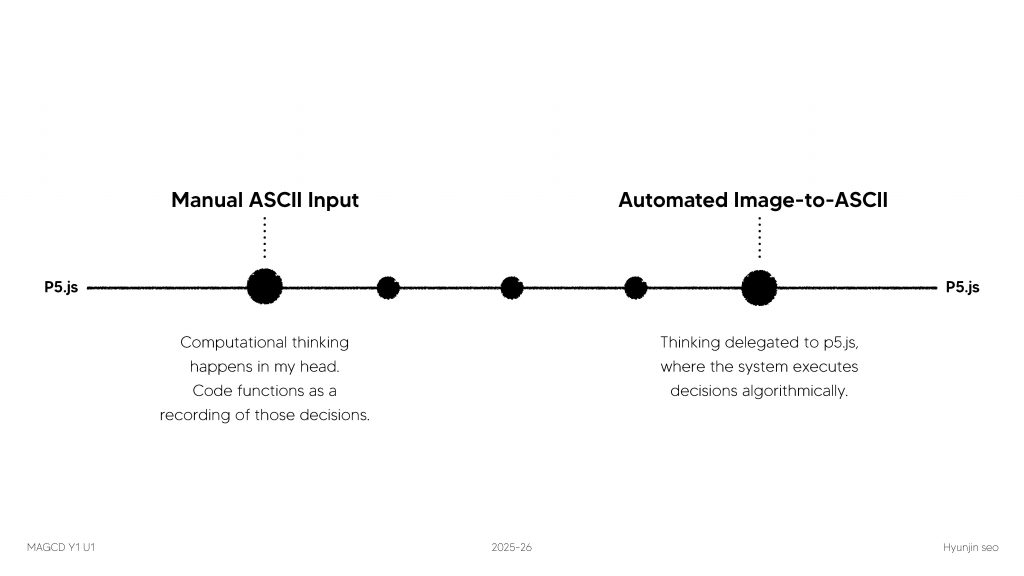
From the most human-centric method, where everything is typed manually, to the most machine-driven method, where uploaded images are automatically translated through code.
From this perspective, coding is not defined by efficiency or automation, but by the act of instruction itself.
Both manual input and automated processes are forms of coding, but they exist at different positions on the same spectrum of instruction: In manual ASCII input, the computational thinking happens primarily in my head, and the code functions as a recording of those decisions. In automated processes, the same thinking is delegated to p5.js, where the system executes those decisions algorithmically.
This led me to reconsider p5.js not simply as an image-making tool, but as a system in which instructions can be distributed in different ways.
I began to ask:
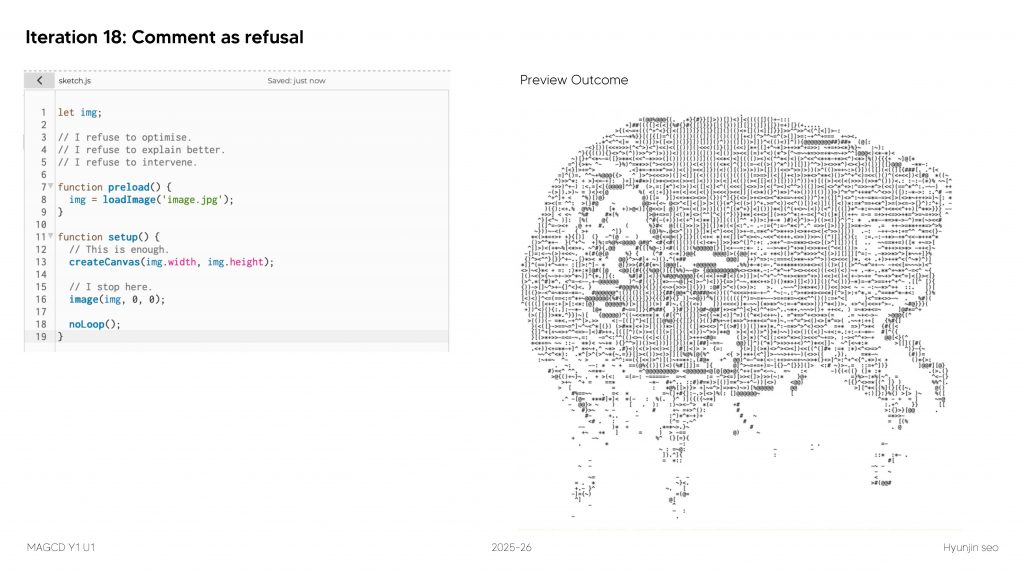
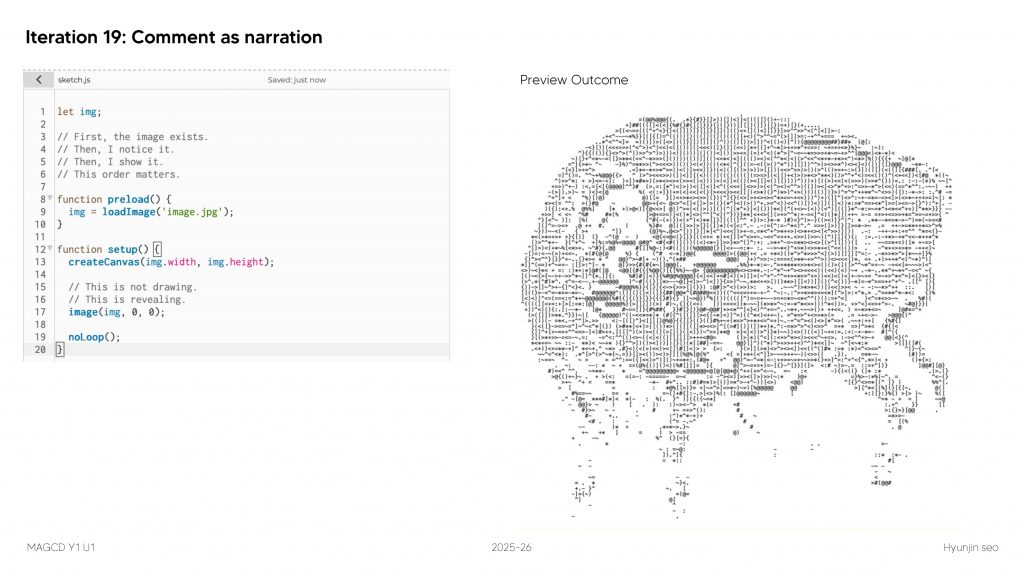
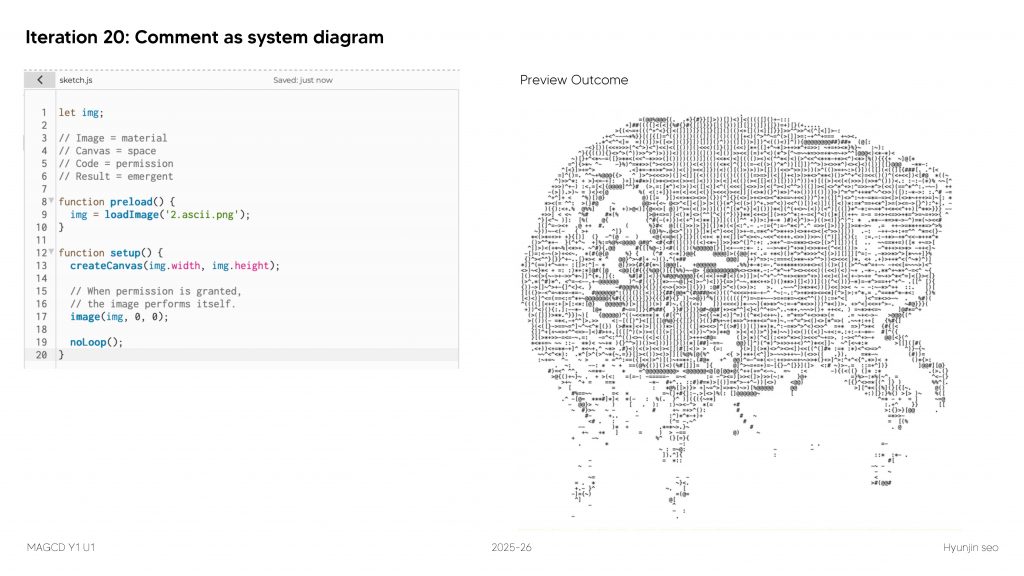
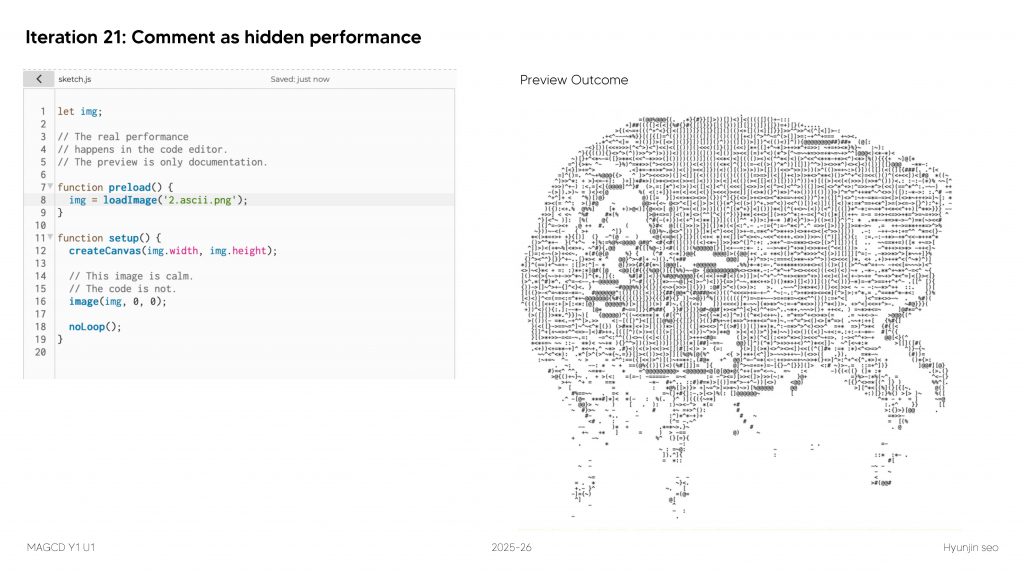
What happens if I deliberately explore different distributions of instruction within p5.js while producing the same image?
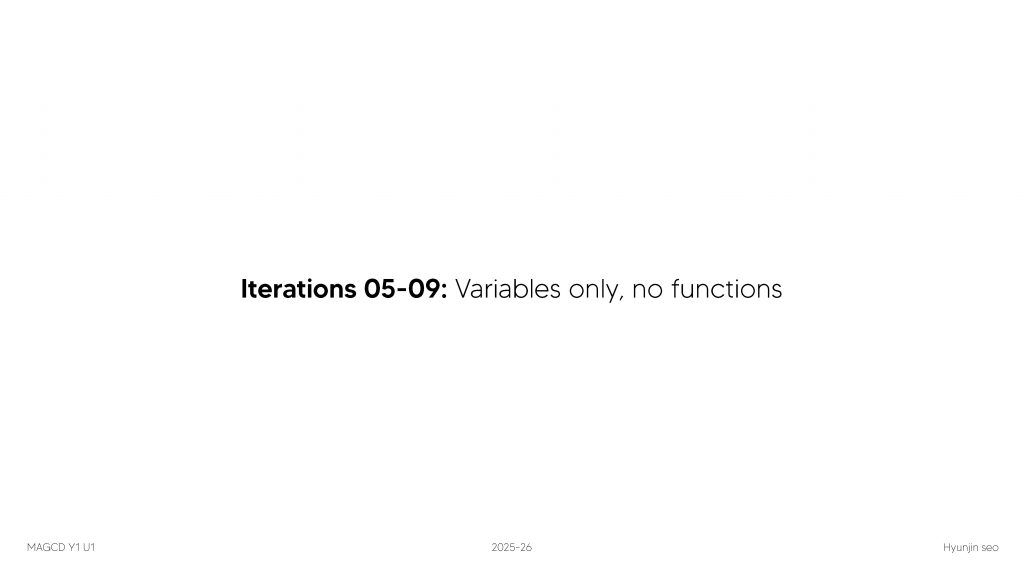
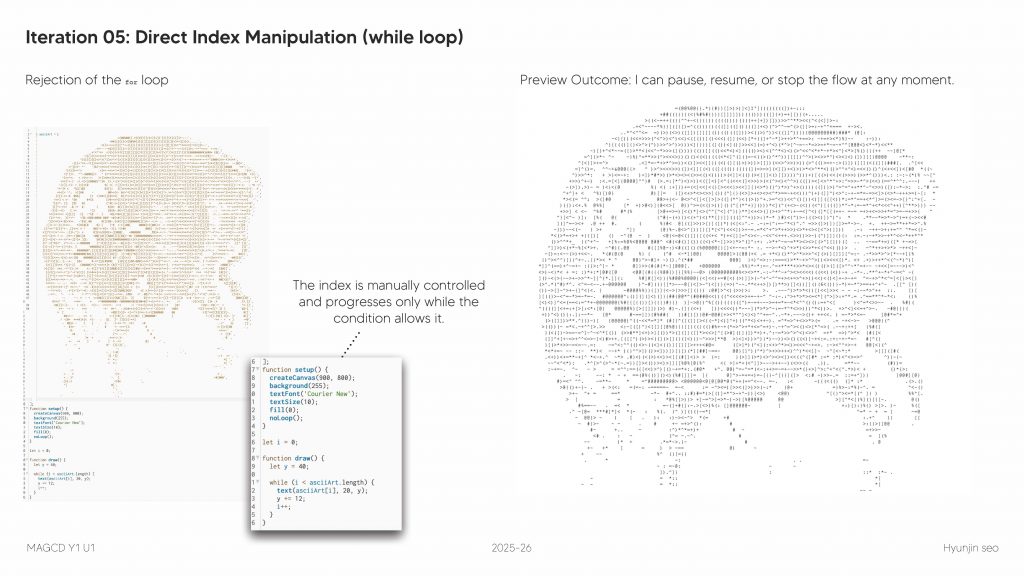
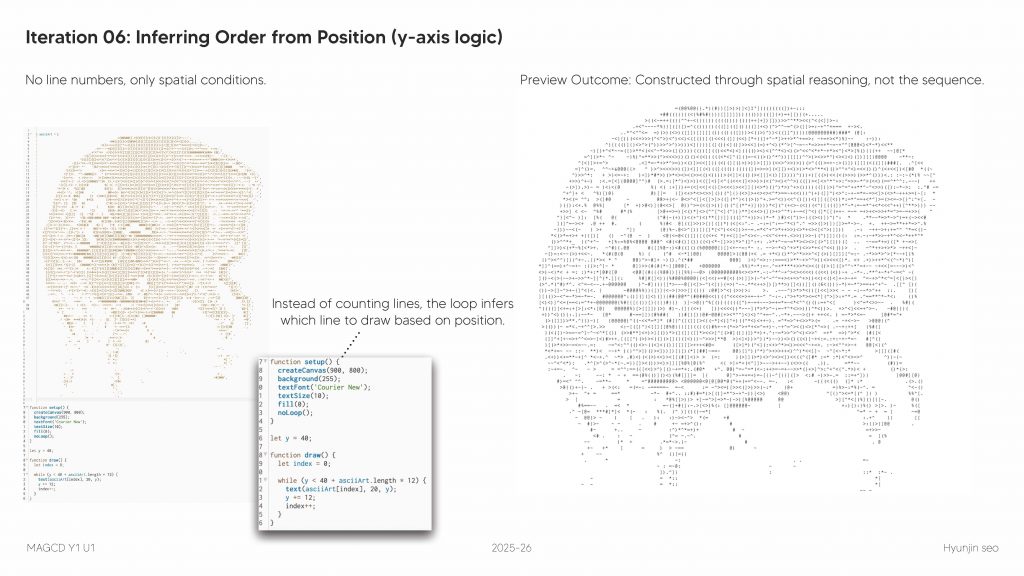
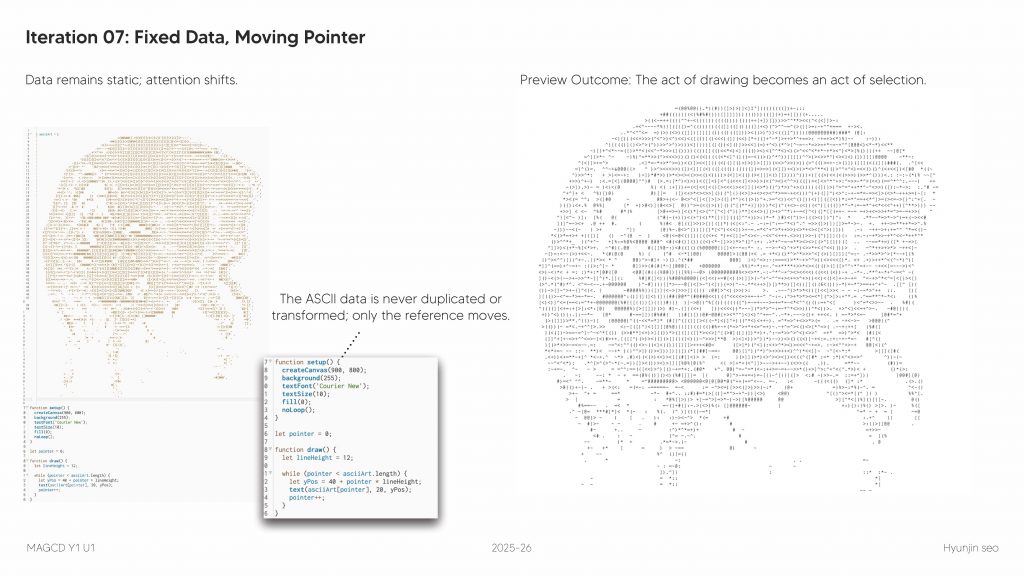
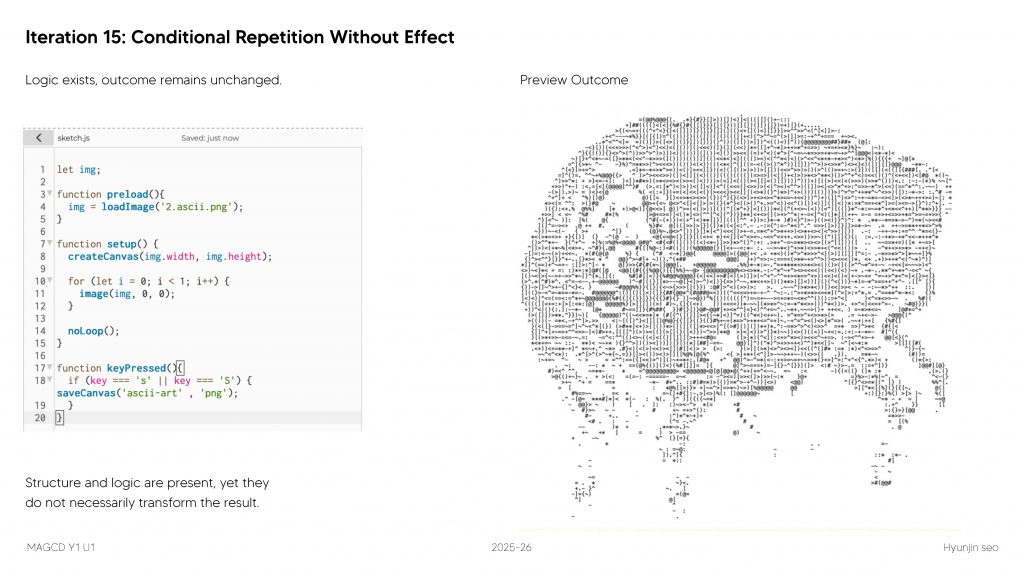
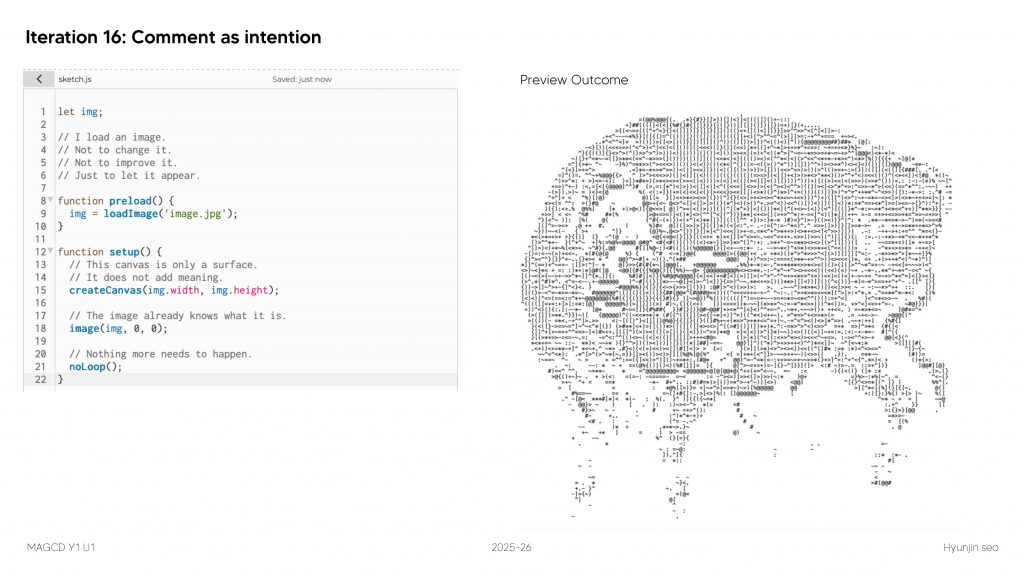
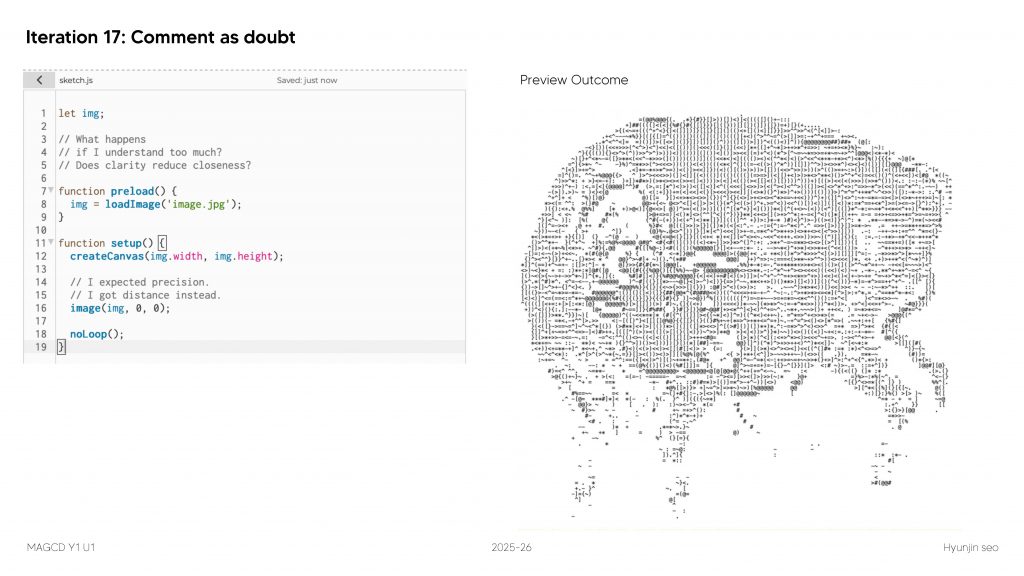
So I made a fixed condition for my Method (Fixed Parameters), generating the same cow ascii images using P5.js and the output will be the code, console and the final preview image.
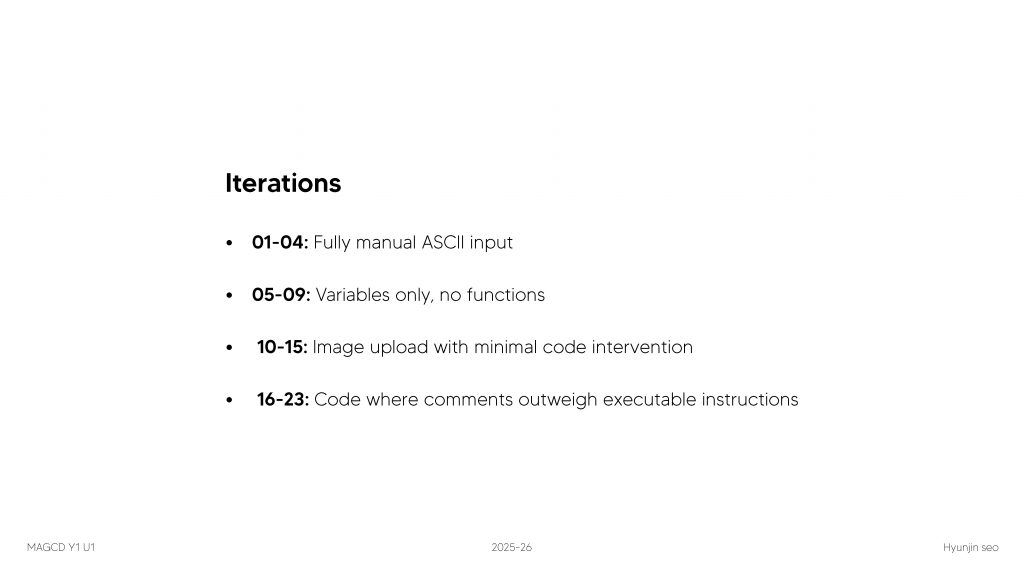
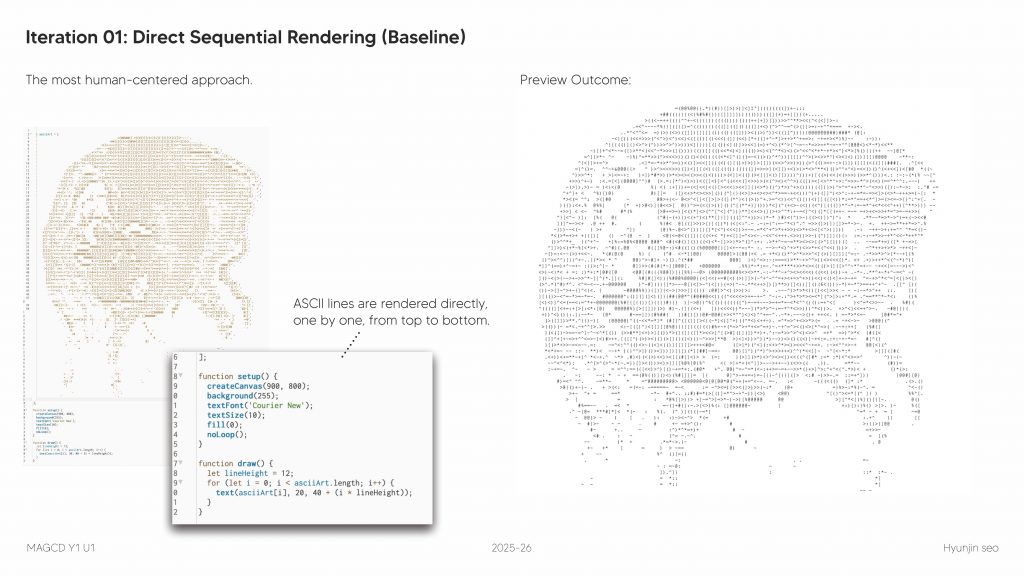
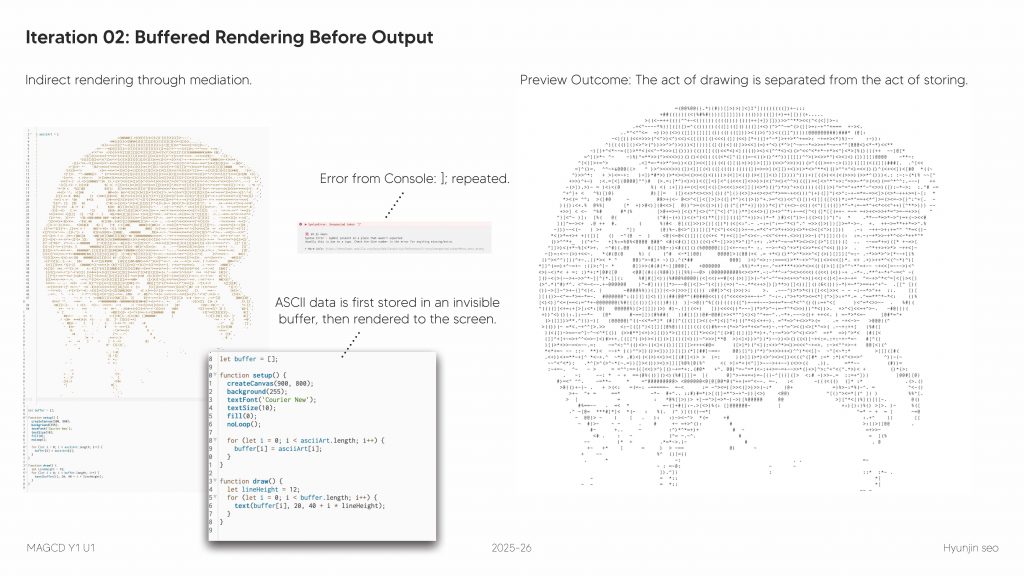
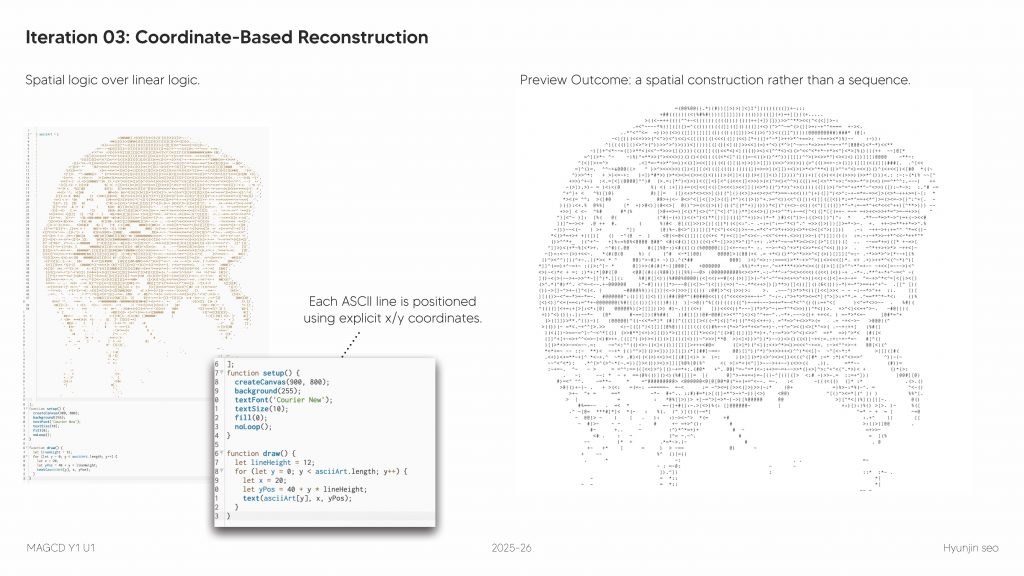
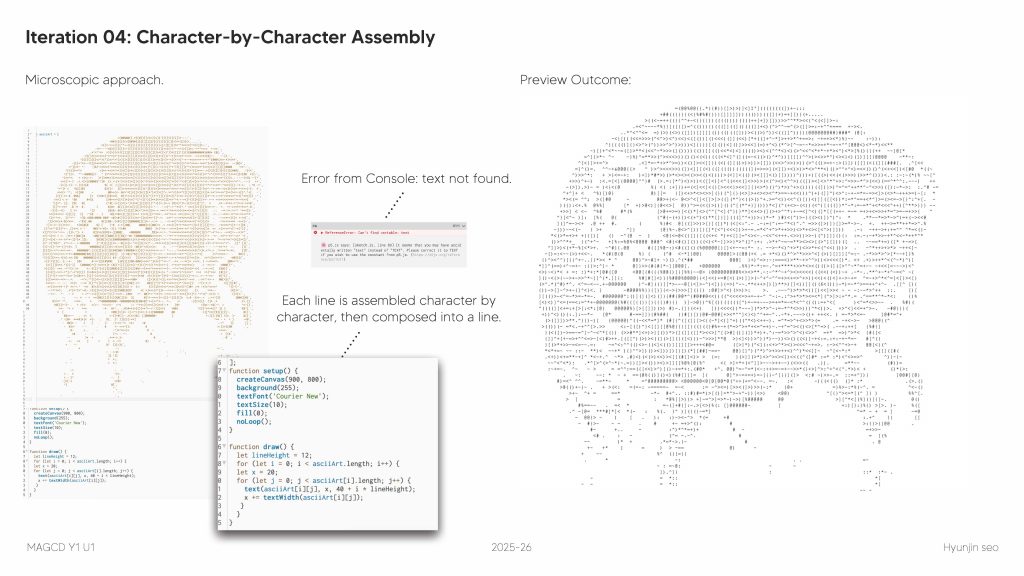
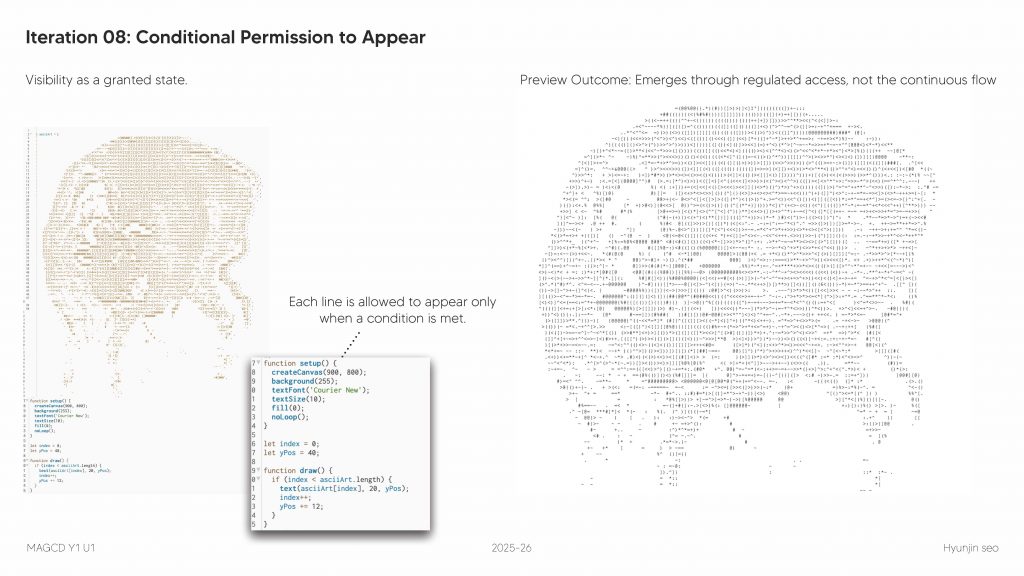
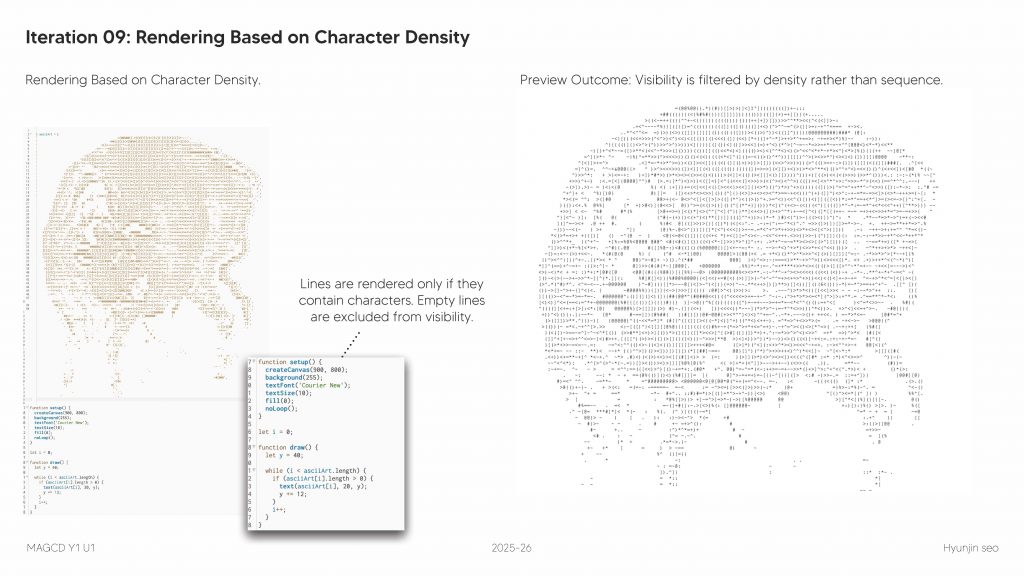
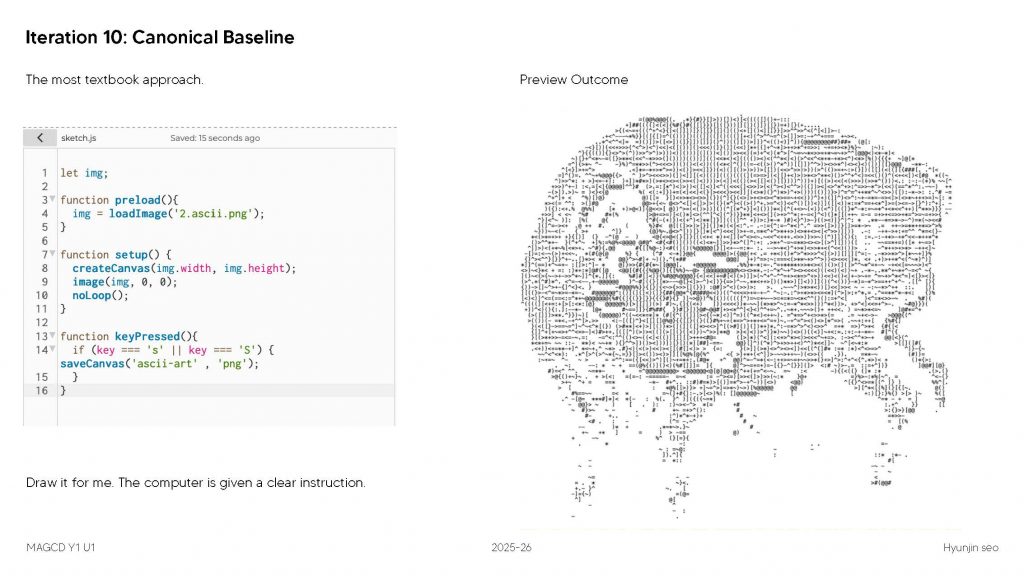
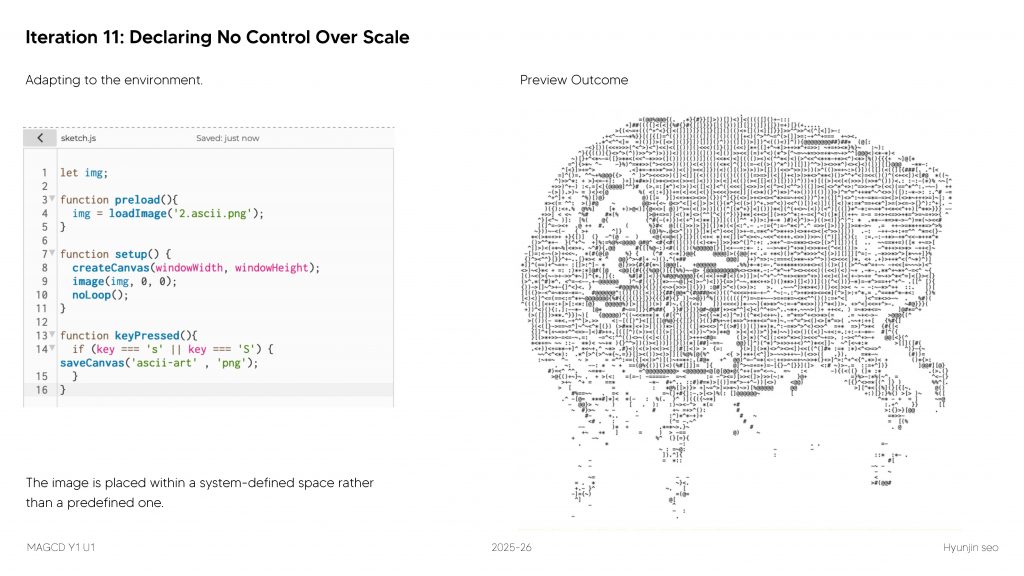
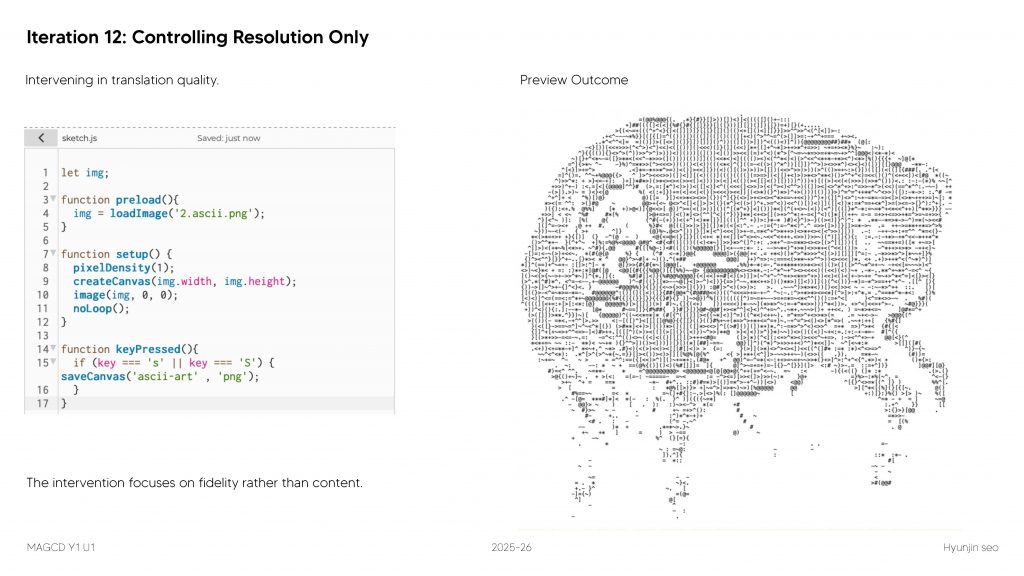
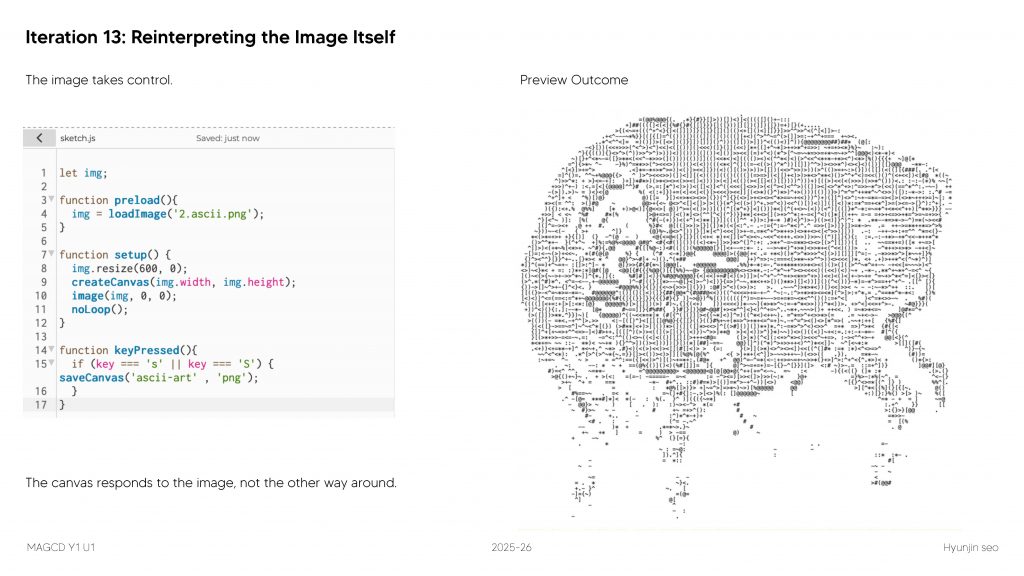
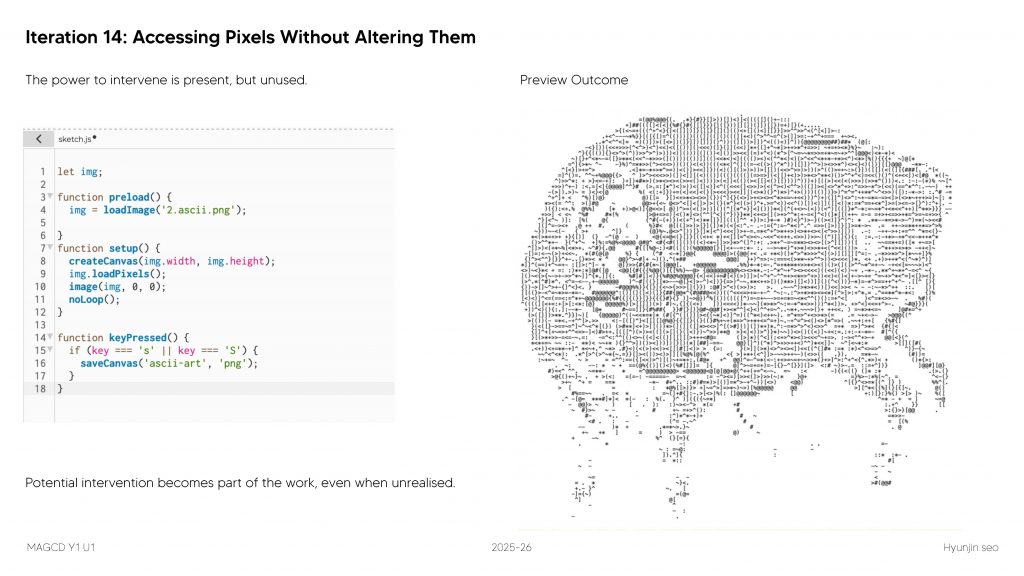
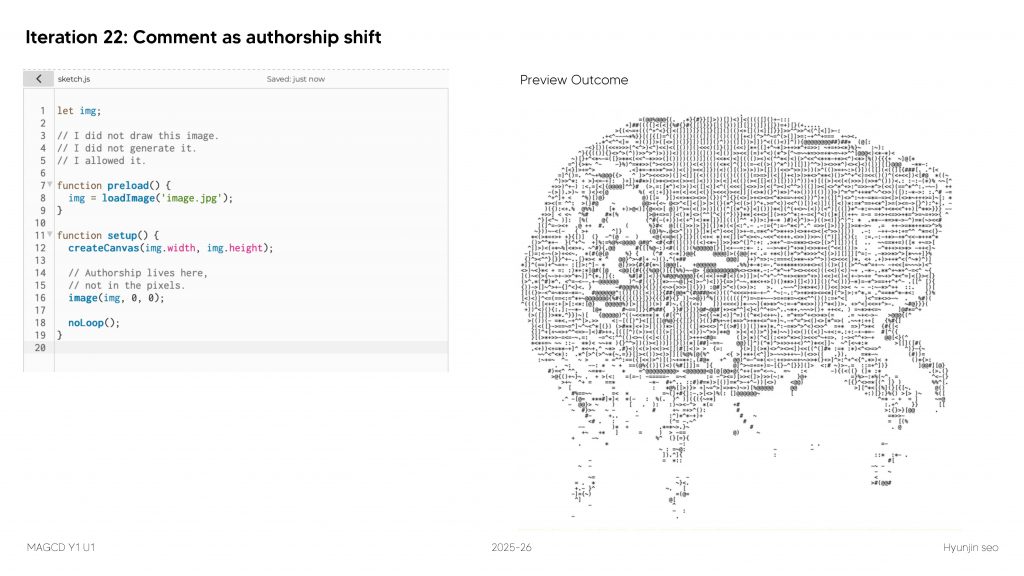
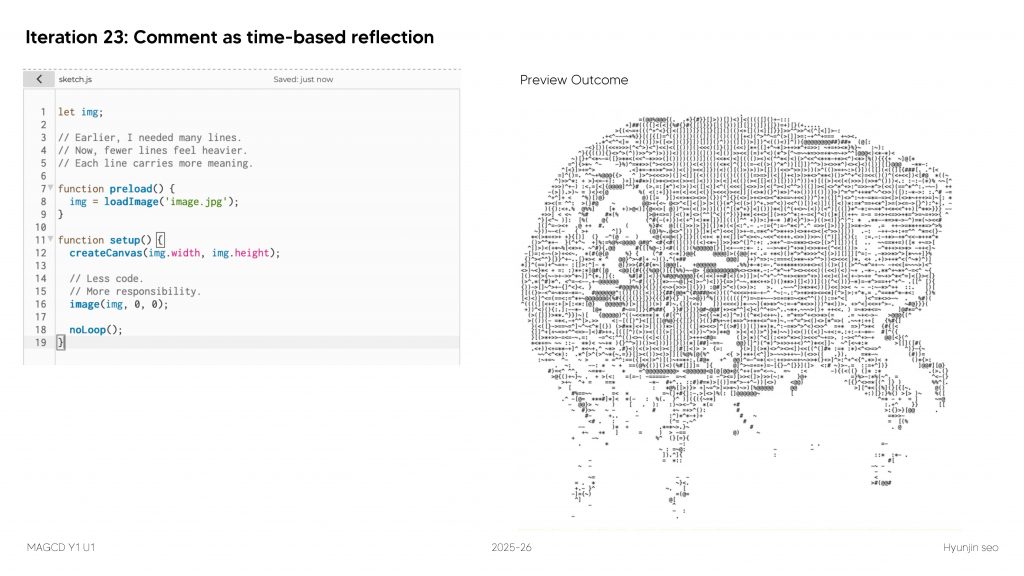
As I moved between these methods, a question started to emerge:
Is authorship located in the final image, or in the way instructions are distributed?
I noticed that I could arrive at the same visual outcome again and again, but through very different paths and processes.
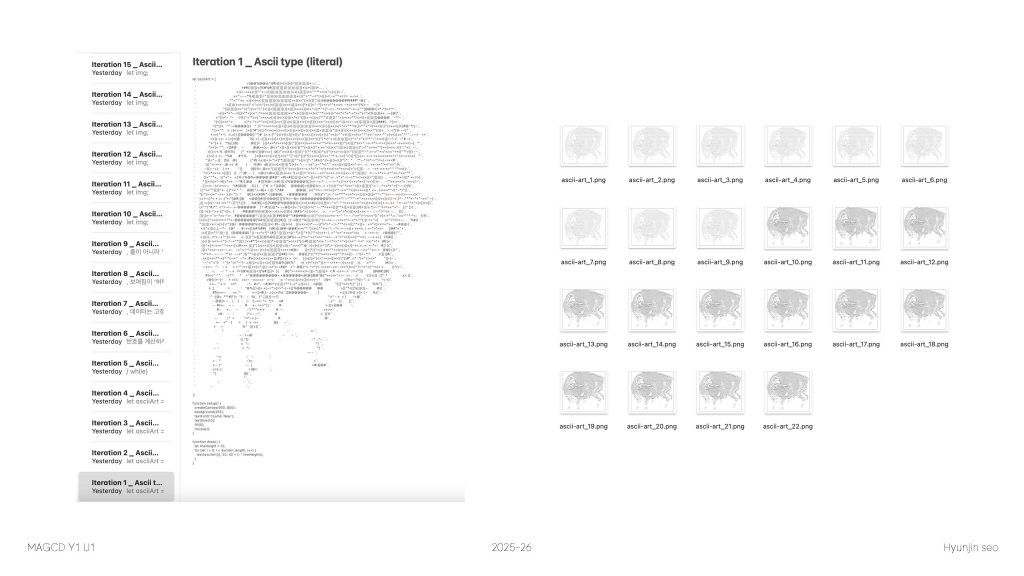
Each method implied a different way of thinking, a different epistemology, and a different relationship between me and the machine.
This is where I began to treat coding not simply as a way to produce images, but as a way to think about authorship itself.
Through iteration, I started to deliberately subvert the original purpose of p5.js. Instead of using it purely as an image-making tool, I shifted the focus toward how images come into being.
I no longer positioned myself as a “user” of the software, but as someone who designs the conditions under which things appear.
In this sense, my role shifted from illustrator to system architect.
Leave a Reply