My Unit 2 expended with a question: How can a visual system hold multiple voices, times, and historical positions without collapsing into a single readable narrative.
And, ended with a question: How can graphic communication design resist institutional control of heritage by turning archival silence into an act of reconstruction?
Initially, I approached this through my own family history, 80 fragmented slips of paper belonging to my great-great-grandfather. But through my research, I realised that these fragments were already ‘flattened’ by the languages and administrative formats of colonial and state powers.
Heritage as Process
“Rachel Emily Taylor’s concept of ‘Heritage as Process’ was a turning point. I stopped seeing my work as a static family tree and started seeing it as a political engagement with heritage. I realised that the archive is a site of tension between state protection and institutional control.
Following Shaun Tan’s approach to ‘sensory sensation,’ I decided to focus not on exhaustive data, but on a singular, sensory ‘stab,’ the deep, personal violations that the state’s official vocabulary fails to capture.”
Studio Output: Navigation system to Pocket-Accordion
This led to my physical studio responses:
1. Navigational system: Diagram and Website
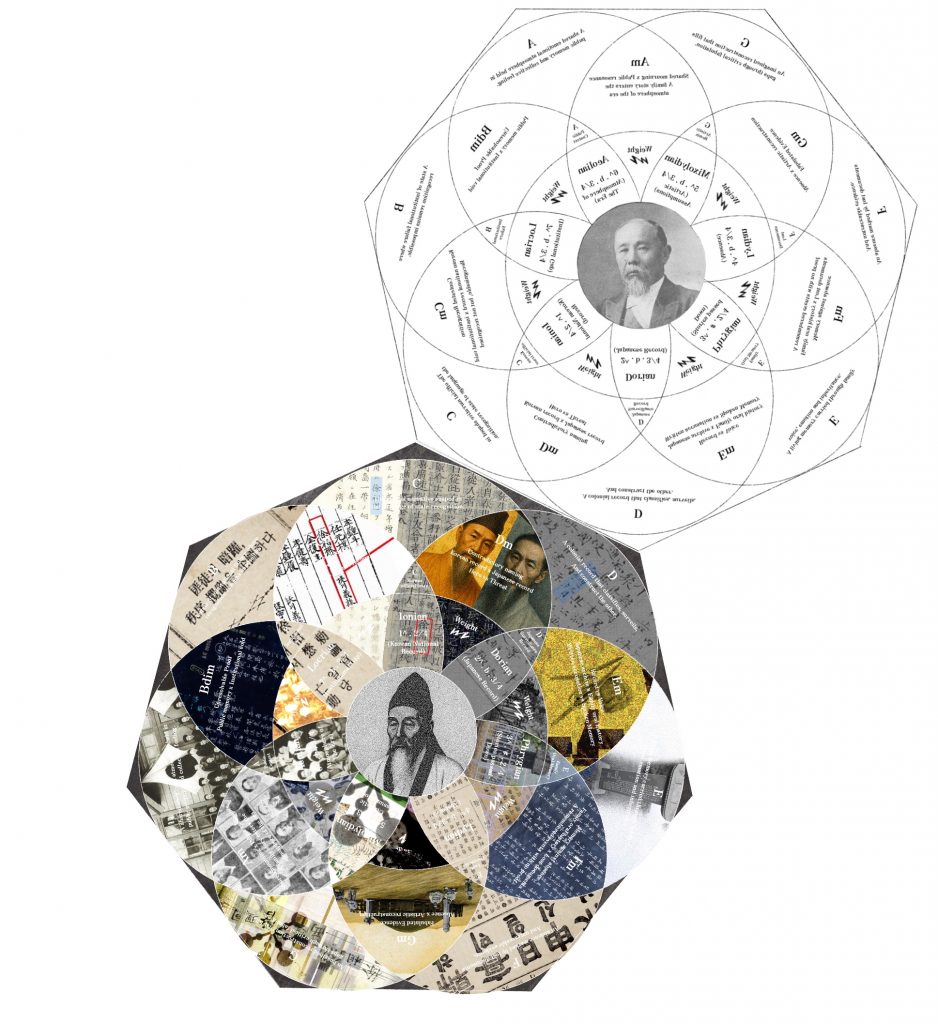
2. A ‘Pocket-Accordion’ book.
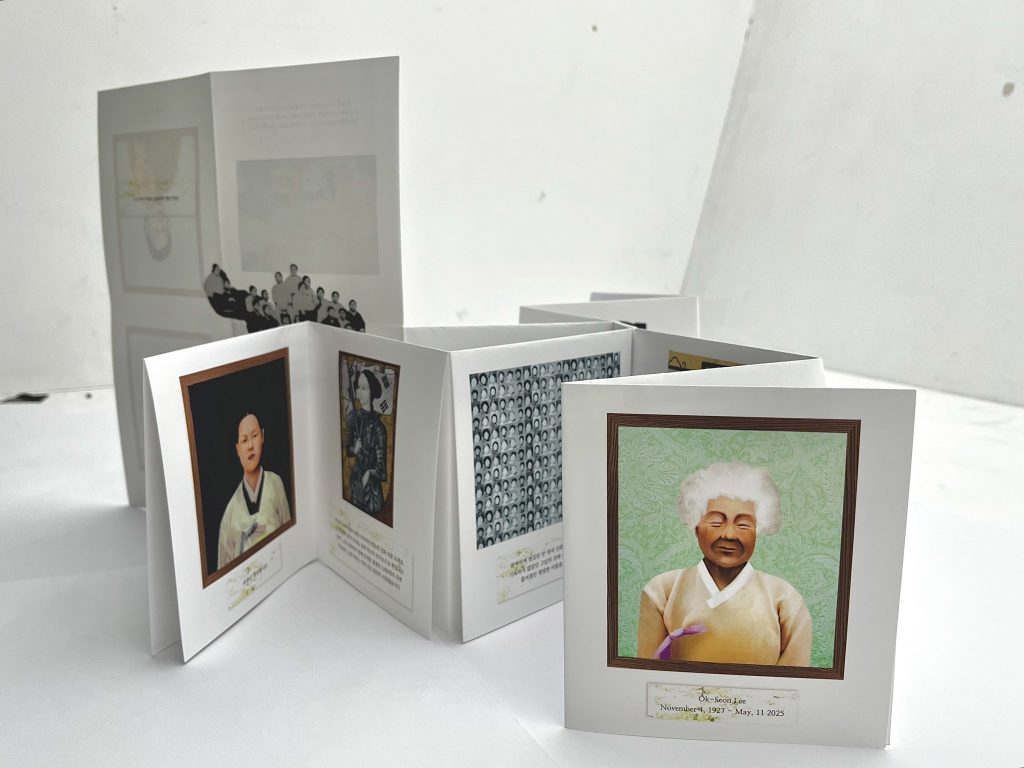
It uses a three-layer structure to move the audience from the ‘Official Surface’ (Layer 1) to the ‘Distorted Archive’ (Layer 2) and finally to ‘Critical Fabulation’ (Layer 3).
The physical design forces a dual-directional reading; Korean and English audiences unfold the book in opposite directions, reflecting the untranslatable gap in historical responsibility and emotional debt.
Confronting Feedback: The ‘Political’ & The ‘Silenced Voice’
After my contextualising, I realised in overall my work is actually deeply political. And it is. But I started this work from empathy, not politics. The stories I chose, comfort women survivors, Park Cha-jeong, Yu Gwan-sun, activists who refused state recognition, are political because the state made them political. I didn’t.
Also, my attempt to write neutral captions, I had unintentionally silenced my own voice as a designer. I was trying to let the stories speak for themselves. But neutrality is also a position. And mine was disappearing behind it. These two pieces of ideas kinda led me to think about navigation.
Redefining Navigation
Navigation, in its technical definition, is the process of monitoring and controlling the movement of a craft or vehicle from one place to another.
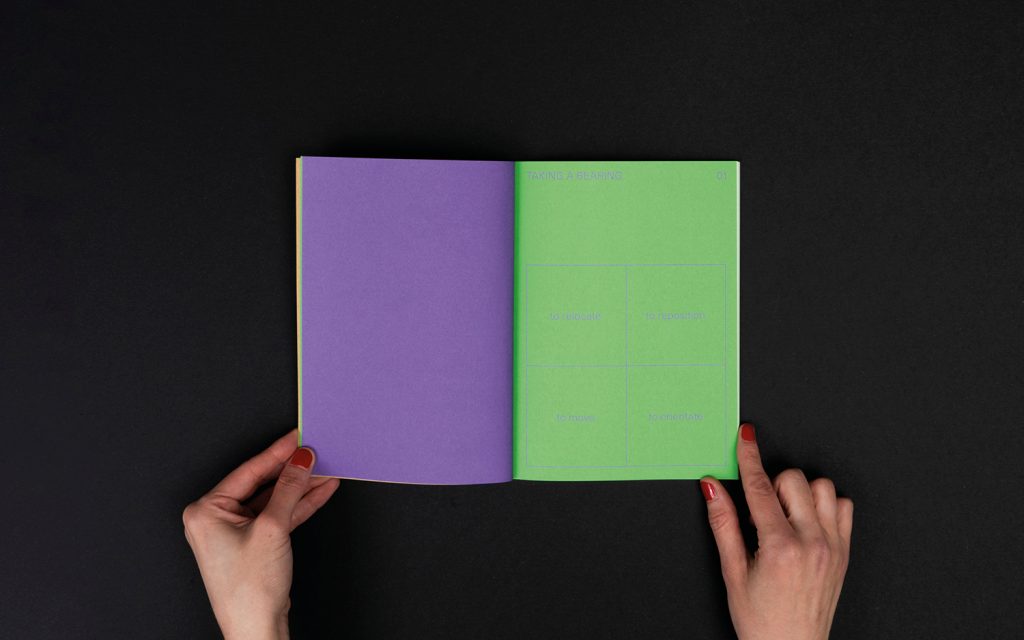
As Adesola Akinleye writes in Navigations: Scoring the Moment — curators, engineers, and architects share a common interest in how we direct bodies in what they see, what they hear, and when they stop or start.
I realised that the state’s official history, the museum’s standard tour route, and the GPS system in your car are structurally identical. All three are invisible control systems designed to be followed without question.
And my book, with its layers, its dual directions, its hidden pocket, is also a navigation system. One that asks the audience to question the route. And i wanted to use my video essay to talk about navigation not as a metaphor, but as the literal form of the work.
So through this video, I wanted to explore graphic communication design as a movement choreography as it is a system that directs bodies to certain direction. Reading, watching artwork, national stories are all navigation and neutrality is in-fact an interface that allow frictionless navigation.
Why am I making what I am making?
Throughout Unit 2, I became interested in understanding heritage not as a fixed historical outcome, but as an active and ongoing process. I also began to see systems not as the core of my practice, but as tools for navigating and revealing hidden narratives.
This video became a way of expressing both ideas simultaneously: heritage as process, and navigation itself as a process of questioning, rerouting, and negotiating history. By moving through and against the official navigation system of state-approved history, I wanted to visualise my own act of navigating these stories while encouraging the audience to actively reroute themselves in order to encounter suppressed and erased voices.
Video Essay Concept: Rerouting History
The video essay will be titled ‘Rerouting Navigation.’
It will mimic a car’s GPS system. A cold, mechanical English voice will act as the institutional guide, instructing the audience to ‘Proceed straight on the approved highway of history.’ However, the narrative will be disrupted by a ‘Critical Malfunction,’ the sound of human, Korean voices inside the car deciding to ignore the GPS. ‘The official highway doesn’t have the voices we need,’ they say. ‘Turn the wheel.
Phase 1: The Functional Interface (0:00 – 0:50)
- The video opens in absolute silence. A screen-recording of Adobe InDesign or Illustrator. The mouse cursor adjustments grids, lines, and folding marks on an accordion layout. Improving the navigation of the book.
- Then, a dictionary definition of “Navigation” fades in over the digital workspace: “Navigation: A field of study that focuses on the process of monitoring and controlling the movement of a craft or vehicle from one place to another.”
Critical Context: It demonstrates that the functionality of reading is also ‘functional navigation’ controlled by the movement path designed by the designer. Showing the journey i took to answer the question of How can I guide the audience through the book without letting them get lost?
Phase 2: The Controlled Heritage (0:50 – 1:40)
- The digital workspace fades out, dissolving into sterile, well-lit museum display cases, official state portraits, and clean administrative archives (Layer 1).
- Over these images, GPS navigation line (like a car satellite map) is superimposed, guiding a virtual arrow straight down a linear highway. The navigation voice continues, but now it’s guiding through history.
- The audience is following a route designed by the state. Without question. Text from Adesola Akinleye’s Navigations emerges as a subtitle:“Curators and engineers share a common interest: how we create movement… how we direct bodies in what they see, what they hear, and when they stop or start.”
Critical Context: audience began to realise that the essence of navigation is about directing the body, where to move, what to look at, and when to stop. This led me to connect the standard viewing routes of museums and officially sanctioned national histories (Layer 1) as forms of carefully controlled navigation systems.
It exposes that while it may appear peaceful like ‘Walking Around the World,’ the nation’s official history and museum tour routes are a massive control system orchestrated to force audience to consume what they intended.
Phase 3: The Critical Malfunction (1:40 – 2:50)
- GPS line suddenly glitches, flickers, and shakes. The sterile museum images fracture into chaotic, overlapping visuals. Raw, unedited Korean voices inside a car): Conversational, human Korean voices cut in, as if we are sitting inside a moving car) ‘이리로가는게맞아?’ ‘지도에는이게전부야.’ ‘근데저기길이또있어.’ ‘경로를이탈했습니다. 재탐색합니다.’
- Layer 2 opens. The cracks appear. Park Cha-jeong’s gravestone. The Catholic funeral that was refused. Three thousand people reduced to a crowd. Korean and English begin to mix.
- 탑승자 A: “이리로 가는 게 맞아? 내비대로 가고 있어?”
- 탑승자 B (디자이너 본인의 생생한 목소리): “아니. 내비가 가라는 고속도로에는 할아버지의 진짜 목소리가 없어. 가부장제가 지워버린 여성들의 이름도, 서류가 없어서 국가가 인정하지 않은 수많은 사람들의 진짜 서사도 다 이 깔끔한 도로 밖에 버려져 있어. 나 내비 무시하고 이 80개 종이 쪼가리 밑으로 갈래. 핸들 꺾어.”
- English GPS Voice (Distant, muffled, panicking): “Rerouting. Make a U-turn into the approved archive. Rerouting…” (The voice snaps off into static)
Critical Context: At this point, the passengers inside the vehicle, the designer and the voices themselves, begin to “reroute.” By refusing the predetermined navigation system (the official national record) and turning instead toward shortcuts and side roads (the 80 fragmented paper pieces and hidden voices), the film shifts from a simple instructional guide into a video essay that creates fractures within the system itself.
Phase 4: Outro (3:30 – 3:50)
- The navigation voice returns. ‘You have arrived at the destination. Navigation Ended.’
- The screen goes dark. Then text appears slowly.
- All navigational techniques involve locating the navigator’s position compared to known locations. What if the location is not on the map? What if it was removed?
- A close-up of one of my great-great-grandfather’s 80 slips of paper.
- ‘This is where it started.’
- The book closes. Screen black.”
- What is not recorded is not absent. Its absence is the record.”
Feedback
- There is something ‘playful’ in my work, maybe show that a bit more?
- Actually adapting or introducing the actual ‘Folding’ somehow.
- Want to see something more ‘Physical.’ My work has a really strong physical element, and the video should show that too.
- Maybe doing an actual mockup of the exhibition space? Current digital visual language does not incorporate my exploration of unit 2 very well.
Leave a Reply