Bibliographical entry with a short statements:
1. Blauvelt, A., Maurer, L., Paulus, E., Puckey, J. and Wouters, R. (2013) Conditional Design Workbook. Amsterdam: Valiz.
Initially, I deeply explored an analogy based on DNA transcription and translation to redefine my understanding of a “system.” I mapped my great-great-grandfather to DNA (the inaccessible origin), the archives to mRNA (extracted fragments), and my role as a designer to the Ribosome, synthesising these elements into a protein (the living narrative). I was fascinated by how DNA remains inactive unless it is read, translated, and physically folded through interaction. However, I recognised that the highly technical, biological complexities of DNA computing and origami were becoming too overwhelming and rigid, distracting from the human stories at the core of my practice. Consequently, I shifted away from the literal scientific framework and turned to the Conditional Design Workbook. Blauvelt’s manifesto—“The designer no longer designs the final form, but designs the conditions in which forms can emerge”—perfectly rescued the emotional and participatory core of my DNA experiment without its technical baggage. It allowed me to transform what initially felt like a cold, rigid system into an open, reactive environment. Through this shift, my accordion book ceased to be a static display; it became a set of formal conditions where the narrative is only activated, de-flattened, and felt when the audience physically engages in the act of unfolding.
2. Taylor, R. E. (2020) Heritage As Process: Constructing The Historical Child’s Voice Through Art Practice.
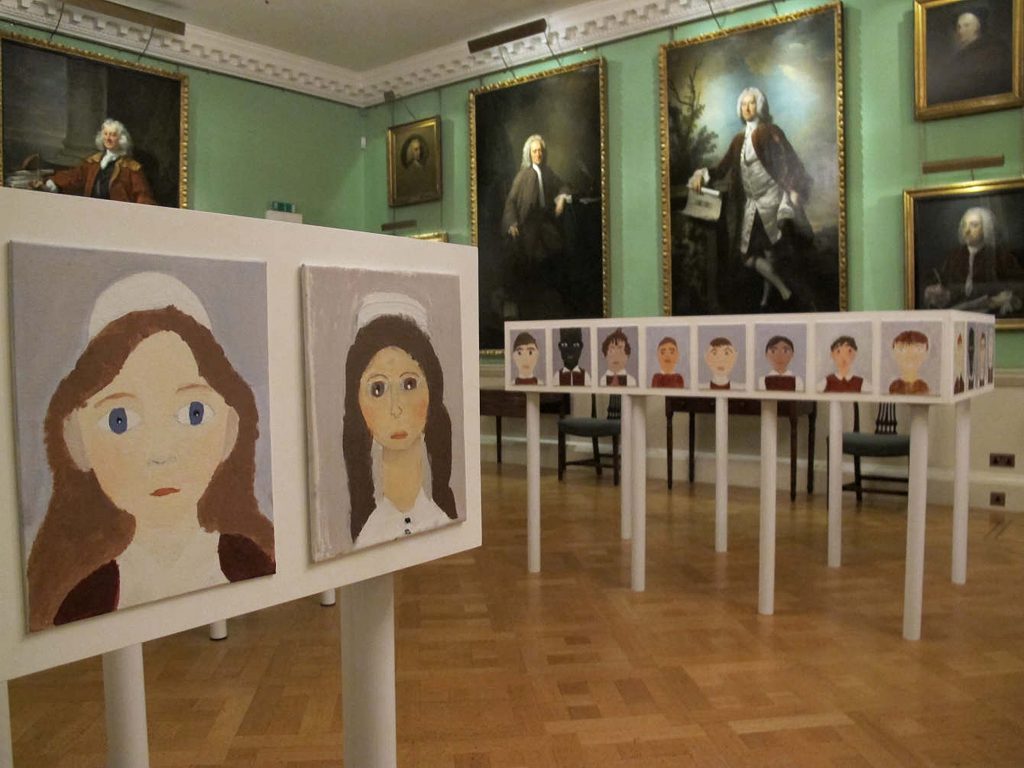
Taylor’s concept of “curating as looking after” provides the methodological foundation for my practice. By identifying how institutional captions at the Foundling Museum erase the individual voices of children to construct a sanitised history of “childhood,” Taylor demonstrates that heritage is not a fixed monument but an ongoing process. In my project, I translate her framework from an institutional workshop format into a physical editorial mechanism. While Taylor works within the museum space, I operate outside it, searching for what the state deliberately chose not to keep. Her focus on reconstructing lost voices through creative practice validates my use of folding as a tangible strategy to uncover the personal narratives crushed by administrative classification,
3. Kim, Y. (2023) Badangbat (Sea Field): Manifesting Intangible Cultural Heritage through Illustration.
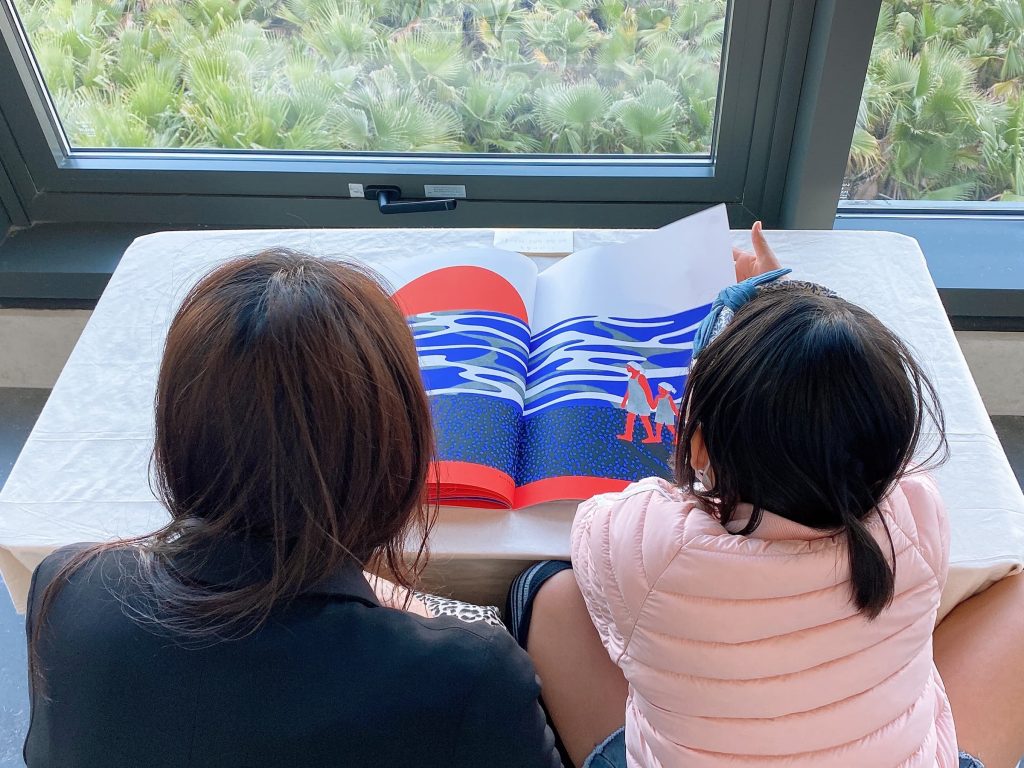
Kim’s practice-based research expands my understanding of illustration not merely as decoration, but as a “cultural generator” and an interpretive bridge between generations. Her work with the fading Jeju language and Haenyeo culture utilises drawing during interviews and workshops to capture lived experiences that formal archives overlook. This directly enhances my studio work by repositioning my drawing style as a critical tool. Kim proves that visual representation can synthesise verbal fragments and emotional nuances into a tangible form. In my project, I adapt this approach to move beyond a cold, scientific presentation of historical victims. Instead, I use drawing to bridge the gap between historical alienation and modern empathy, turning illustration into an innovative method for sustaining memory as a living, breathing entity.
4. Suh, D. H. (2019) The Bridge Project.
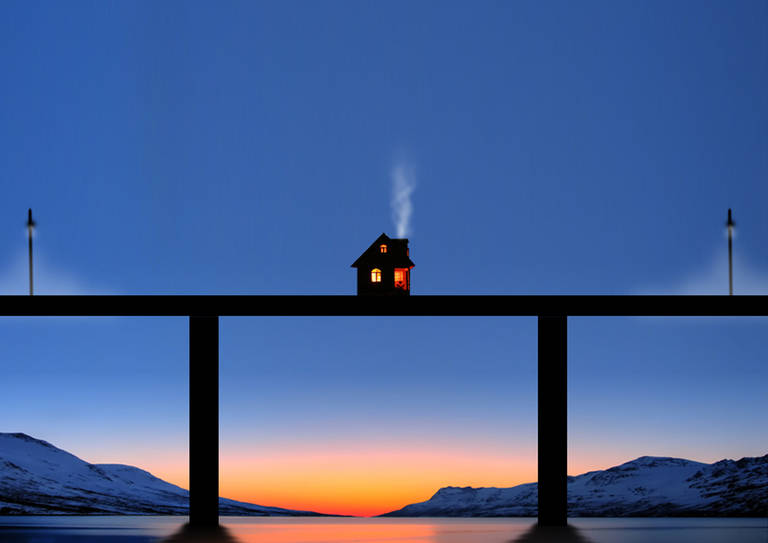
Suh’s ongoing exploration of the “perfect home” through migration and memory challenges the rigid boundaries of national and political archives. By unfolding deeply individual yet universally relatable spaces, Suh demonstrates that private architectural or domestic memories can serve as arenas to interrogate geopolitical displacements. This directly informs the physical and emotional architecture of my accordion book. Suh’s work validates my decision to map out the “stolen futures” and private spaces of my subjects, such as a quiet room filled with family photographs. It stretches my practice by showing that the meticulous reconstruction of private, micro-historical spaces can become an experimental, engaging method that invites the audience to recall their own domestic warmth, thereby confronting macro-historical absences.
5. Tan, S. (2006) The Arrival. Arthur A. Levine Books.
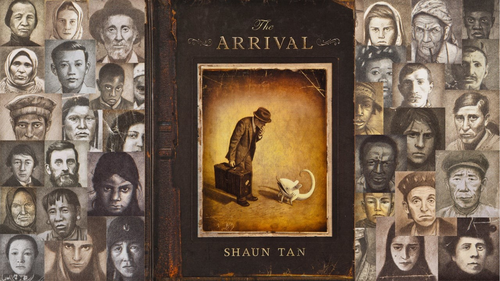
Tan’s wordless graphic novel profoundly altered my approach to information management by introducing the power of “sensory compression.” His opening sequence of silent immigrant portraits establishes an immediate, deeply human connection before any narrative context is given, proving that emotion can bypass historical alienation. Confronted with the overflow of traumatic data in my research on ‘Comfort Women,’ I learned from Tan that listing every bureaucratic violence only dilutes the impact. Instead, Tan’s method pushed me to isolate a single, sensory “stab”—such as the cold imposition of a state-mandated Buddhist funeral over a private Catholic faith. By adapting Tan’s logic, my Layer 1 portraits establish an empathetic, wordless entry point, leaving gaps that invite the audience to perform their own critical fabulation.
6. Hartman, S. (2008) ‘Venus in Two Acts’, Small Axe, 12(2), pp. 1-14.
Hartman’s theory of “Critical Fabulation” acts as the conceptual anchor for Layer 3 of my structure. Her practice of writing into the blank spaces of the transatlantic slave archive, playing with white space, imagining what could have been said, without ever concealing the lack of an actual record, directly guides my illustrative restorations. Hartman challenges the graphic designer to resist the urge to neatly “fix” history or falsify a happy ending. Instead, she teaches me to use soft, distinct pencil lines to signify that Layer 3 is a restorative, speculative space. Her text deepens my practice by framing imagination not as a fabrication of historical untruths, but as an ethical, creative intervention designed to return human dignity to those whom the official state archive left entirely unrecorded.
7. Warburg, A. (1924–1929) Mnemosyne Atlas.
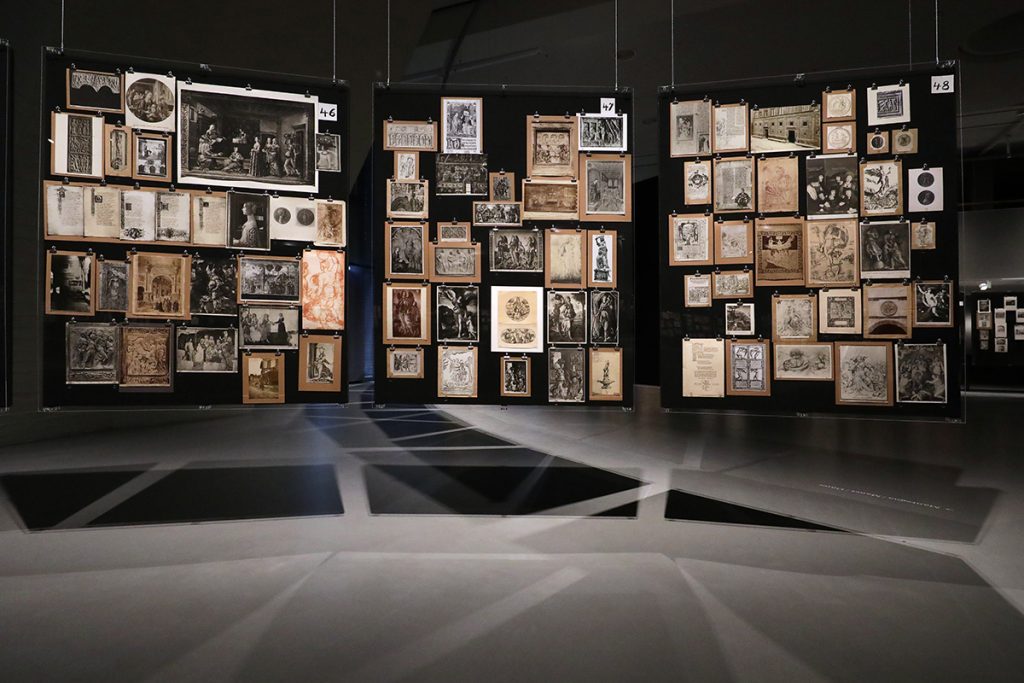
Warburg’s unfinished iconographic constellation challenges the linear, institutional categorisation of historical timelines. By pinning disparate images together across different eras, geographies, and themes, the Mnemosyne Atlas creates a visual laboratory where memory behaves as a dynamic, shifting energy rather than a static record. This expands my line of enquiry by justifying my role as a “visual facilitator” who assembles fragmented archives. Warburg’s associative layout directly informs my use of the accordion structure, allowing the five historical figures in my book to coexist within a giant, virtual family photo. It strips away the state’s clinical chronological divisions, enabling the audience to map out cross-temporal relationships between separate instances of institutional control and personal resistance.
8. Tillmans, W. (2009) Kepler Venice Tables.
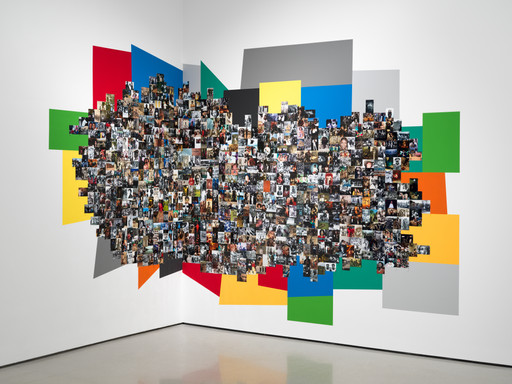
Tillmans’ Venice Tables project uses large, flat display surfaces to assemble newspaper clippings, personal photographs, and found texts, subverting the traditional authoritative voice of the museum vitrine. While institutions use display cases to classify objects into permanent categories, Tillmans uses the table format to create a democratic, unstable grid where high politics and everyday ephemera carry equal weight. This heavily expands my critique of the natural history display case (“FORE LIMB OR WING”). Tillmans’ practice provides a visual counter-strategy: by mimicking the flat, authoritative arrangement of official documents on my book’s surface, I create a visual alibi of state control, only to destabilise it completely once the physical folds are pulled open by the viewer.
9. Tenen, D. (2017) Plain Text: The Poetics of Computation. Stanford University Press.
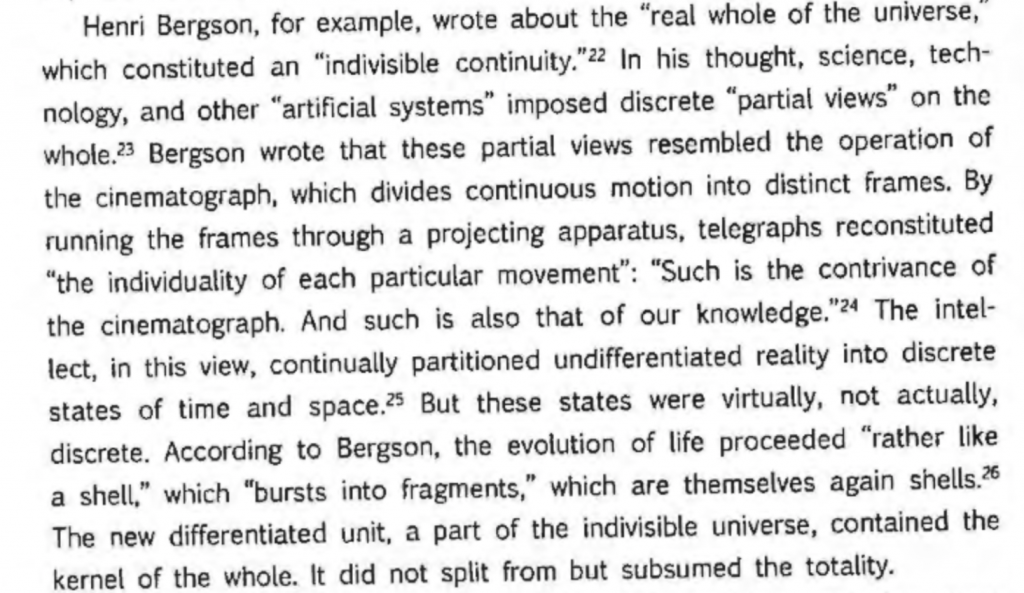
Tenen’s media-theoretical exploration of “literature down to a pixel” introduces a profound connection between physical surfaces and hidden administrative layers. He argues that plain text is never neutral; it is always bound to a hidden material, computational, or political infrastructure that formats and flattens human expression. This stretches my critical enquiry by allowing me to equate computational flattening with bureaucratic flattening. Tenen’s insights justify my focus on the physical forms of modern state applications, grades, and certificates. It reframes my book design not merely as a container for text, but as a material critique of “formatting” itself, showing how state institutions use standard paperwork to compress raw, chaotic patriotism into flat, manageable archival data.
10. Hugh, S. (Created by) (2022) Pachinko. Apple TV+.
The television adaptation of Pachinko provides a masterful reference for navigating the “divided audience” and the multilingual burdens of Zainichi/Korean history. The series utilises colour-coded, trilingual subtitles (Korean, Japanese, English) to visualise the invisible borders of language, identity, and displacement. This directly inspired the structural orientation and linguistic roles of my book. Pachinko demonstrates that historical trauma cannot be consumed equally by all viewers. By observing how the show uses cinematic language to navigate cultural proximity, I resolved to use the physical orientation of my folding book to segregate my audiences, keeping the internal pockets of “untranslatable”모국어 (mother tongue) whispers exclusively open to the Korean accomplice, while offering poetic sensations to the international viewer.
11. Metahaven (2015) Sunshine Unfinished, in Black Transparency: The Right to Know in the Age of Mass Surveillance.
Sunshine Unfinished is an infographic designed along the logic of the game ‘Snakes and Ladders,’ tracing the concept of transparency across politics, philosophy, and architecture from 109 AD to the present. The title alludes to Justice Louis Brandeis’s famous quote that “Sunlight is said to be the best of disinfectants,” a metaphor for how visibility can “cure” social diseases. This reference challenges my practice to think about the visual rhetoric of illumination. In my project,the “Official Surface” (Layer 1) functions like Metahaven’s sunlight, a curated visibility that claims to be “complete.” However, Metahaven’s use of the game logic reveals that transparency is often a power play of visibility and concealment.This deepens my understanding of how a diagrammatic timeline can be used not just to show information, but to critique the conditions of how that information is made visible or hidden by institutional power.
12. Kwami, A. (2015) Grace Kwami Sculpture [Leporello/Concertina Artist Book].
Atta Kwami’s Grace Kwami Sculpture is a tribute to his mother, Ghanaian sculptor Grace Salome Kwami. The work is a leporello (concertina) bound book designed to unfold and stand on its edge, resembling the eight legs of the spider Ananse from West African folktales. This reference was the pivotal physical “solve” for my studio outcome. It shifted my thinking from a flat digital layout to a three-dimensional “reactive object.” Kwami’s work demonstrates that a book can function as a sculpture that occupies space and requires a specific physical engagement. I adapted this logic into my “Pocket-Accordion” structure, where the folding is no longer just a way to save space, but a physical manifestation of the gaps and creases within the historical record.
Extended critical analyses of two of the references: one text and one project (500 words)
Analysis 1: The Practical Project
Taylor, R. E. (2020) Heritage As Process: Constructing The Historical Child’s Voice Through Art Practice. [Practice-Based Research / Curation Project at the Foundling Museum, London]
In her practice-based doctoral research at the Foundling Museum, Rachel Emily Taylor conceptualises “Heritage as Process,” interrogating how institutional museum captions overwrite the historical voices of marginalised orphan children with a sanitised narrative constructed by adult administrators. Rather than treating heritage as a static monument, Taylor positions it as an active, continuous performance. By facilitating workshops where contemporary children engage in role-play and making, she dynamically reconstructs historical voices through multiple contemporary interpretations. This methodology shifts across formats: from archival investigation to social engagement documented via “Field Notes,” and finally to a radical spatial subversion, curating the children’s fragile artefacts back into the museum’s physical display cases. This creates “ensemble voices” that challenge monolithic historical curation, mobilising the Scottish definition of curating: “to look after.” Formally, this commitment is made visible through tension between institutional register and the personal, the children’s uneven, unfinished outputs sit inside the same vitrines as polished historical artefacts. The form enacts the critique.
Engaging with Taylor’s work completely reoriented my project. I had mistakenly believed my work was a cold, genealogical reconstruction of my great-great-grandfather’s journey, leaving me conflicted between emotional storytelling and rigid system-thinking. Taylor’s framework made me realise I was actively engaging with the politics of heritage. Examining my family’s materials, I noticed my great-great-grandfather’s “true voice” was entirely absent, only eighty fragmented slips of paper in classical Chinese and Japanese, records generated by colonial administrations, governments, and descendants. His identity was already flattened by visual communication formats, languages, and political filtering, confirming that flattening is inherently embedded in the historical process, produced by the tension between state protection and institutional control.
Moving beyond my family narrative, I recognised this structural flattening across modern Korean history, where recording itself acts as institutional power. This erasure spans three overlapping groups excluded from the state’s official vocabulary: unrecognised activists whose covert or gendered resistance lacked documentary proof; figures whose recognition was distorted or weaponised, such as Park Cha-jeong, defined on her gravestone merely as a general’s wife, or Yu Gwan-sun, flattened into a textbook trope while three thousand fellow protestors were reduced to an anonymous crowd.
I translate Taylor’s methodology into a new medium through folding. While Taylor operates within institutional boundaries, curating missing fragments back into the museum space, my translation critiques the museum system itself. Through a pocket-accordion structure, folding becomes a resistive gesture, the audience must physically open the surface to navigate three layers: the authoritative Layer 1, the distorted Layer 2 archive, and the Layer 3 space of Critical Fabulation. Taylor’s multiplicity of voices guided the structural dualism of my book: inner pockets unfold in opposite directions by language, keeping untranslatable Korean emotional truths inaccessible to the English-facing side. For me, Taylor’s definition reframes curating not as preservation but as excavation, actively uncovering what the institution chose not to keep. What is not recorded is not absent. Its absence is the record.
Analysis 2: The Text
Blauvelt, A., Maurer, L., Paulus, E., Puckey, J. and Wouters, R. (2013) Conditional Design Workbook. Amsterdam: Valiz.
Andrew Blauvelt and colleagues define the core proposition of Conditional Design as follows: “The designer no longer designs the final form, but designs the conditions in which forms can emerge.” This shift repositions the graphic designer from author to architect, from someone who delivers a fixed outcome to someone who constructs a set of rules, constraints, and relationships within which meaning can be actively produced by others. The Conditional Design Workbook formalises this as a practice, presenting a series of process-based exercises that foreground the system over the result. The formal qualities of the book itself reinforce this position: its diagrammatic instructions, process-oriented language, and deliberately open-ended outcomes resist the idea of a singular, authoritative reading. The workbook does not show you what to make. It shows you how to make conditions for making.
This framework directly challenged and clarified my own practice. At the beginning of this project, I was building a rigid system and positioning it as the core of my work, a fixed structure that would organise fragmented historical narratives into coherent form. This felt cold and reductive. Engaging with Conditional Design helped me understand why: I had conflated the system with the outcome, when the system should function only as a set of conditions. The pocket-accordion structure I developed, a physical object that unfolds in opposite directions depending on the reader’s language, revealing three conceptual layers, is not the work itself. It is the condition through which the work becomes possible. The audience must physically open the surface. They must choose a direction. They must decide how far to go. The narrative does not exist until they produce it.
However, my work also complicates and partially inverts the Conditional Design proposition in a way I find more honest to my practice.
In Conditional Design, the system is the fixed element and the outcomes are open. In my project, this relationship is reversed in one significant respect. My illustration style, which had always functioned as a flexible, intuitive tool across my practice, became, in this project, a fixed rule. I drew all four portraits using the same materials, the same tonal register, the same formal language. This was not a spontaneous decision but a structural one: the visual consistency of the portraits functions as a system in itself, preventing information overflow, creating coherence across five separate historical narratives, and allowing the audience to immediately understand that these are not unrelated stories but variations of the same condition. Like Louis Agassiz’s fish catalogue, where visual uniformity across species created the illusion of objective classification, my portraits use stylistic consistency to create the illusion of an official, authoritative exhibition, before the folding breaks that surface apart.
What Conditional Design gave me was permission to trust the conditions over the content. What my practice added back was the understanding that sometimes the most powerful system is not the structure you build, but the visual language you choose to hold constant. The flexible became fixed. The fixed became a tool. The system did not produce the work. It produced the conditions for the audience to produce it themselves.
Leave a Reply